
May 21, 2026
Key Takeaways
In 2011, Netflix committed around US$100 million to make the US version of House of Cards, the political drama starring Kevin Spacey. At the time, it was one of the biggest bets a streaming platform had ever made on original content. The bet paid off: House of Cards went on to win multiple Emmys, drove an uplift in Netflix subscriptions.

Netflix was not making a blind creative gamble. It had been listening at scale, not just to what users watched, but how they watched and what they said about the shows. They identified three overlapping audience signals: subscribers who watched the British House of Cards, those who watched films directed by David Fincher, and those who consistently watched Kevin Spacey.
Behavioural data showed demand. Sentiment signals from reviews, comments, and social conversations confirmed an appetite for a politically-charged drama led by a divisive antihero. All three pointed to the same opportunity, so Netflix greenlit the show.
There are broadly two kinds of organisations in this economy.
The ones that collect customer data, and ones that actually act on it. Most companies sit in the first group: they have dashboards, NPS scores, and quarterly review decks, but the insights rarely change a decision. The organisations pulling ahead sit in the second group. They listen at scale and at speeds a human cannot match, and they move on what they hear before competitors notice the same signal.
What makes this possible today is AI. Interpreting millions of reviews, support tickets, and social conversations used to be slow, expensive, and largely manual. AI sentiment analysis collapses that work. It reads unstructured customer signals at a speed and scale no human team can match, draws the linkages between them, and surfaces what matters in time for the business to actually act. That is the difference between organisations that sit on data and ones that move on it.
This is the quiet shift AI sentiment analysis has brought to businesses.
Many large enterprises run sentiment analysis on customer reviews and social mentions, but the output ends up as a slide in a quarterly business review rather than a live input to pricing, product, or service decisions. The data is collected but it’s not well-acted on.
The lesson is the one defining modern competition. The winner is not the one with the most data. It is the one that interprets and acts on the signals fastest. That is listening at scale.
The shift: The old way of doing sentiment analysis was blunt. Tools scanned for keywords and sorted them into positive or negative buckets. Sarcasm and a lack of context broke them. A review like "oh great, another step, exactly what I needed" would land in the positive pile, even though any human reading it would catch the frustration immediately. The result was a dashboard built on misread signals.
AI sentiment analysis works differently because it grasps nuance. It reads the full sentence, not just the words in it. It can tell sarcasm from sincerity and separate a complaint about price from one about delivery. A single support ticket no longer collapses into one label. It gets broken into structured signals in seconds such as what the customer liked, what they complained about, who they were comparing you to, and the emotional state they were in while writing.
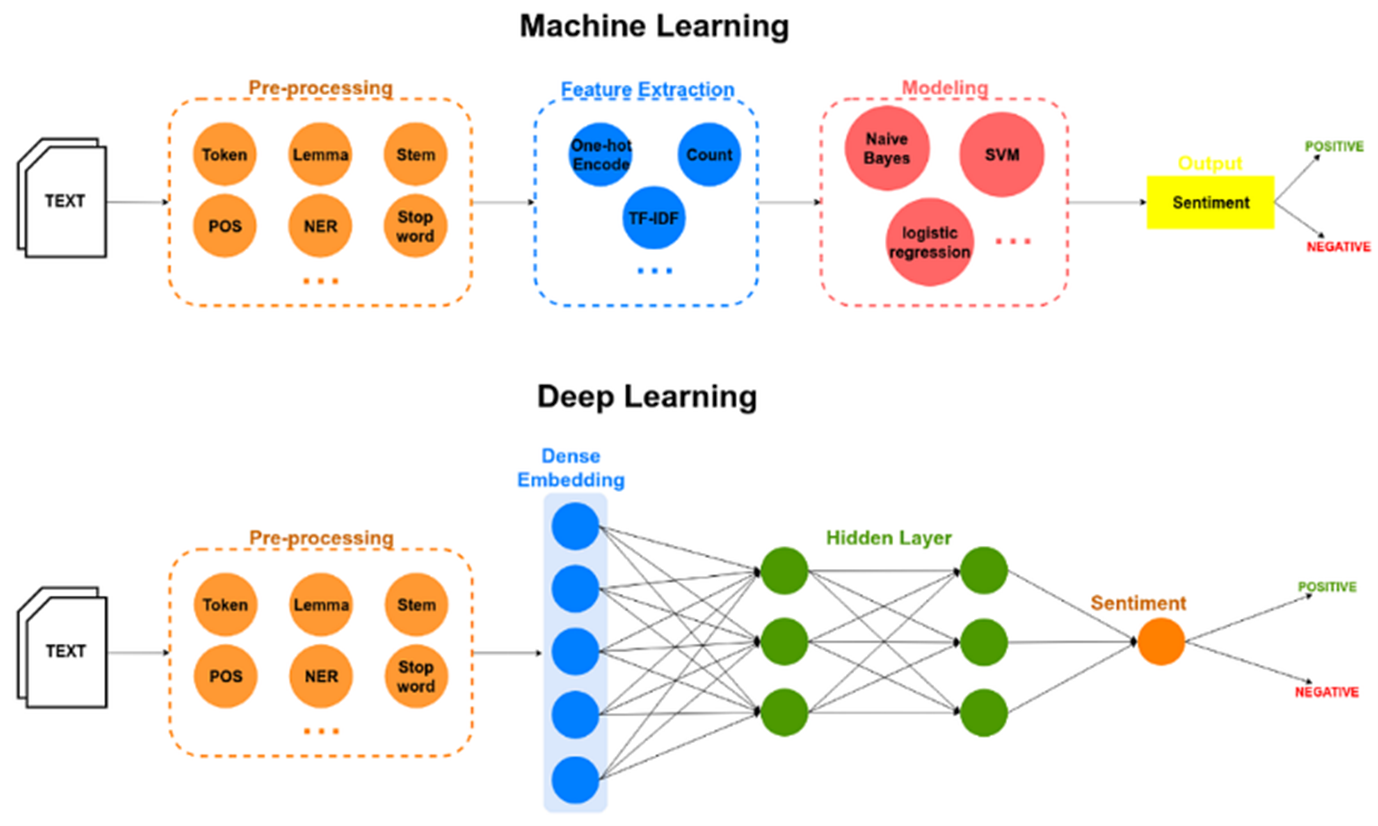
So what? The bottleneck is no longer the analysis. It is the cost and speed of the decision that follows.
AI has reduced the cost of extracting insight from massive amounts of unstructured information. The harder problem now is deciding what matters and acting before the opportunity disappears.
The Signal Engine
The lesson from Netflix is that they built a system their competitors did not have. They did not ask an AI to pick a show. Netflix analysed the searches, pauses, rewinds, skips, and completions. Then they layered on the qualitative System Influence Diagram (SID), such as the comments, reviews, conversations happening across many languages.
House of Cards was the early proof point. The same signal layer later helped Netflix spot non-English content that could travel globally, like Squid Game and Money Heist. Both shows became cultural moments, and neither of them were obvious bets on paper.
Every new release feeds the next decision, which makes the whole thing a powerful listening system that keeps getting better the more it is used.
And the same pattern shows up in many other places: retail assortment, product roadmaps, pricing tiers, service design. Even in our personal lives, we are kind of doing a version of this when we scroll through reviews before buying something.
The Model is commoditised. The system is not.
Here is the part that most businesses miss.
The advantage does not live in the AI model anymore. Anyone with a credit card can use them. If your AI strategy starts and ends with “we use ChatGPT,” that is not really a strategy. That is just a paid subscription
There AI advantage is the listening system built around the model: sources it is fed, structured questions asked, how output flows into decisions, and how fast the organisation can actually act on what it hears. This is the part that takes work. It is also the part that is hard to copy.
Conclusion
Treat sentiment analysis as a decision layer, not a dashboard. Listen to what your users are trying to communicate to you that your numbers are not.
In this area, AI is has changed the economics. It reads unstructured signals at ascale no team can match, separates noise from meaning, and surfaces the linkages fast enough for a decision to actually happen in time.

This means that the winners are not the organisations that go beyond the LLM and build their listening-to-decision system on top of it. They will know what to listen for, what to ignore, and how to use AI to turn the right signals into action before the moment passes. Invest in building the system, not just the model: The model is rented, the listening system is owned.
At Binomial, this is the space we work in: helping organisations make sense of change, sharpen their strategy, strengthen their brand, and build practical plans for long-term growth.