
April 27, 2026
Key Takeaways
In a market where fitness tracking is commoditised, why does Strava feel fundamentally different? Every other app or smartwatch is more than capable of the same technical functions: measuring distance, tracking pace, or estimating calories burnt. Yet, Strava seems to show up across social media far more often than outputs from other platforms, whether in posts about 2XU marathons or daily runs paired with its distinct orange activity map.
People don’t choose Strava because it has better technology or design. Its edge lies in social psychology, and how its service is strategically built around social behaviour. By designing their product around a set of timeless human tendencies, such as our need to be seen, to belong, to compare, and to conform, Strava has reshaped fitness tracking by making what was once an individual activity inherently social. Its features are not just useful; they are highly visible and easy to share.
Whether this is a positive or negative shift is a separate debate. Strava’s approach can cut both ways: the same mechanisms that drive people to excel can also amplify comparison anxiety, encourage unhealthy competition, and create performance pressure for some users. These behavioural levers are powerful, but businesses must apply them deliberately and with care.
That being said, it is undeniable that Strava has come to dominate the fitness tracking space. So, what are the principles Strava is tapping into, and how can your businesses apply them responsibly?
Strava leverages social proof to drive adoption
Strava’s growth is driven by how behaviour spreads. The platform constantly signals what other users are doing, whether through activity feeds, community features, or prompts that emphasise how many others are already participating. These signals define what is normal, and people always look to ‘normal’ to determine their behaviour.
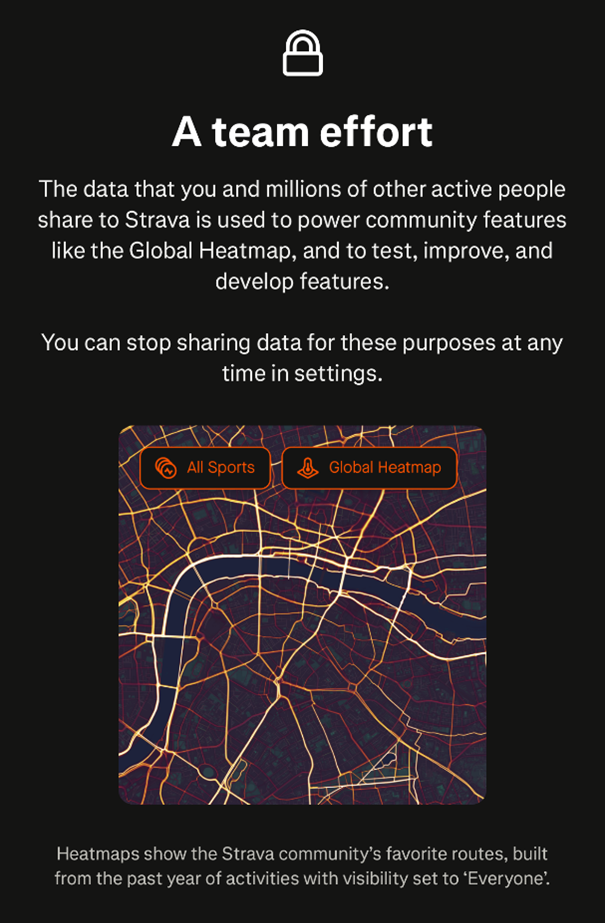
This is rooted in the concept of descriptive norms: people adopt behaviours they perceive as widely accepted. When something looks like the default, it becomes easier to follow. In one psychological experiment, providing hotel guests with descriptive norms such as “75% of guests who stayed in this room reused their towels” significantly increased towel reuse compared to standard pro-environmental appeals.
So what? For businesses, the lesson is to show users what others are already doing, not just tell them why they should care. Adoption accelerates when behaviour is visible and framed as the norm. That means pairing persuasion with social proof, highlighting real usage (e.g., used by 5,000 teams this month) instead of relying on abstract claims.
Netflix offers a simple example. Its "Top 10 in your Country" film list makes it clear what others are already watching. This reframes content choice from personal preference to social inclusion. Viewers are not just deciding what to watch; they are choosing what to be part of. This nudges users towards watching popular shows, which they may follow to stay included or because popularity signals quality, helping Netflix keep audiences on the platform.
Spotify Wrapped relies on a similar principle. By providing a personalised, data-driven recap of users’ yearly listening behaviour, Spotify turns individual listening data into highly shareable social content, while making private behaviour visible at scale. What people listen to becomes something that can be displayed, discussed, and reacted to. This led them to achieve massive organic growth and increased engagement, as users return to stay connected to a broader cultural conversation.
When behaviour is made visible, it becomes easier for others to follow, and when it feels like the norm, it can scale quickly through networks. If your business can make desired behaviours observable, repeatable, and socially reinforced, adoption can become contagious and easier to sustain.
Strava made a solo activity social by design
At its core, Strava transformed a largely private activity into a public one. As the app puts it, “It’s not always a solo sport”.
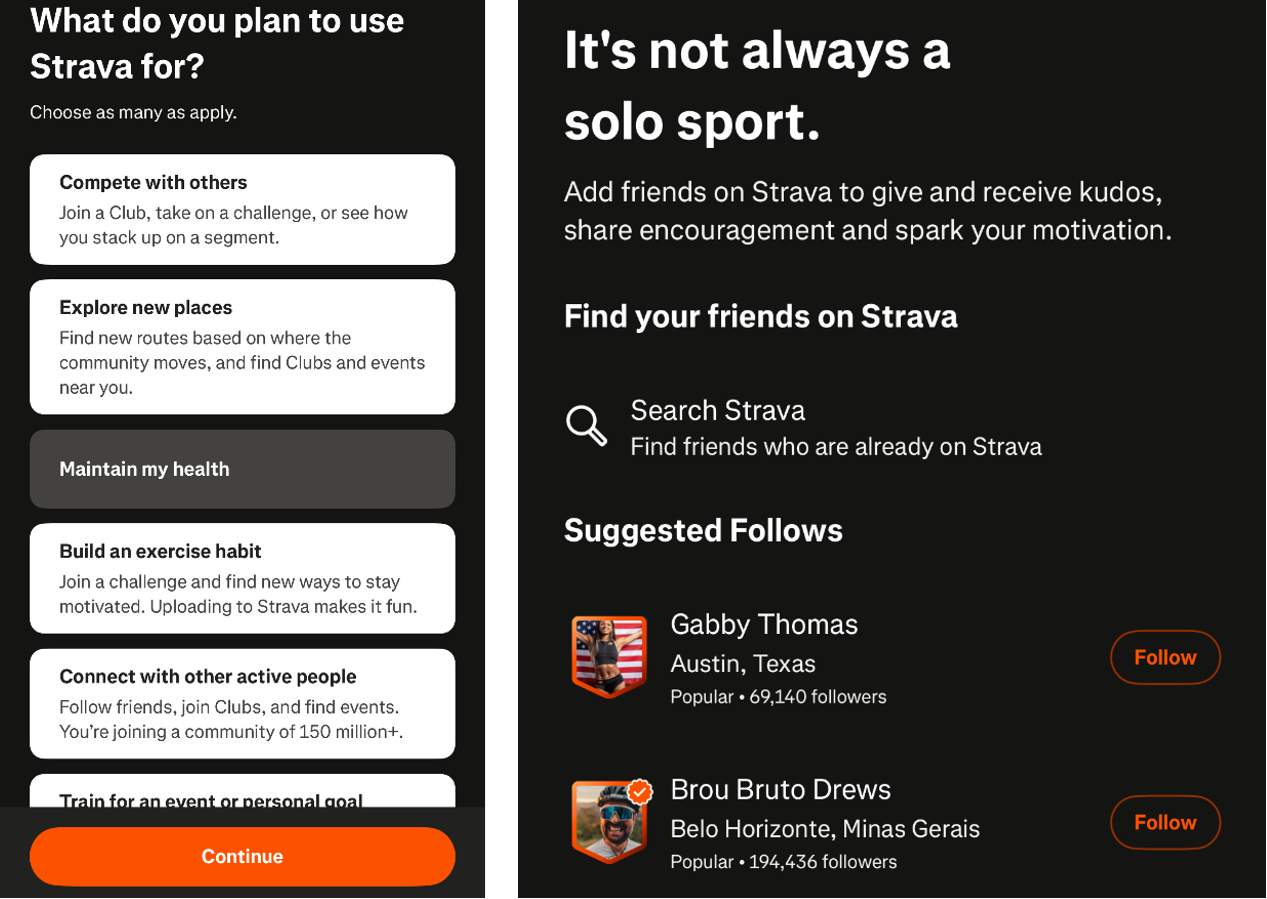
For many users, every run, ride, or workout is no longer recorded solely for personal tracking. Their performance is shared with their networks and evaluated against others. From the moment users sign up, they are nudged to join clubs, follow others, and participate in challenges or community events.
This matters because the presence of an audience can change behaviour. Social Facilitation Theory suggests that people tend to perform better in simple or well-practised tasks when their performance can be observed and evaluated by others. In Strava’s case, users know that their runs will be seen by friends, peers, or a broader community. This sense of being evaluated increases the perceived stakes of each activity, often pushing users to put in more effort or be more selective about what they share.
So what does this mean for businesses? The lesson is not simply to make actions visible, but to create situations where users feel their actions are being observed and evaluated. That effect is especially powerful when the behaviour is already familiar and repeated. In the right context, an audience can lift effort, quality, and consistency without the need for additional incentives.
An example can be seen on Kaggle, where participants compete on public leaderboards and submissions are continuously evaluated against others. This creates an ongoing evaluation and iteration loop, encouraging participants to refine their models over time. Similarly, LEGO Ideas invites users to submit designs publicly for community voting, using a structured selection process to surface ideas that gain broad support before they are reviewed and commercialised. Read more about LEGO’s initiative here: Innovating with Customers: How You Can Unlock Untapped Creativity and Build Brand Loyalty.
If your product depends on user effort or quality, design for visibility and evaluation. When people know they’re being watched, effort goes up, particularly when it is something they are already familiar with doing.
Strava shapes and strengthens the identity of users
Strava plays a deeper role in shaping how users see themselves. By turning runs into visible history through streaks, milestones, and progress records, it creates a narrative. Over time, users move from “I run occasionally” to “I am a runner.”
This shift matters because identity tends to shape behaviour more consistently than motivation. Social Identity Theory suggests that people significantly derive their self-concept from their perceived membership in social groups, leading them to adopt their respective behaviours and values.

Strava reinforces this identity continuously. The platform gives users a visible record of participation, while the broader community strengthens the sense of belonging to something larger. Once users begin to see themselves as athletes, they are more likely to behave in ways that sustain that identity, including continuing to train and returning to the platform.
So what? For businesses, the takeaway is straightforward: products that help users build a story about themselves create stronger and longer-lasting engagement, while also shaping how your platform is perceived and who feels like they belong.
Patagonia is a clear example. Beyond simply selling jackets, they enable customers to identify with a broader group of environmentally conscious consumers through the products they buy and the values they associate with the brand. Initiatives like Worn Wear allow customers to repair, reuse, and share stories about their gear, reinforcing behaviours that align with that identity, along with the values of sustainability and longevity.
When products shape identity, they move beyond utility and become part of how users define themselves. The power of identity cannot be bought, but it can be deliberately shaped, and when done well, it creates deeper engagement and more durable loyalty. If your product shapes user identity, the cost of switching becomes psychological, not just functional.
Conclusion
Strava pushes the boundaries of fitness apps by building a behavioural system grounded in visibility, identity, and social reinforcement. Its advantage lies not in better features, but in redefining how the category is experienced.
That is the broader lesson for your business. In markets where products compete on core capabilities, the real opportunity lies in reshaping user behaviour at scale. The strongest competitive advantage comes from building systems that change how people act, and embedding those behaviours so deeply that they become hard to replace.
At Binomial, we help businesses design for behaviour and identity, not just for features. If you're thinking about how to go beyond product functionality, contact us for a conversation.